Learner Aid destination guide
Tuition from EUR 500. Scholarships up to EUR 7,000. Twelve months to find a job.
Everything Indian students need to know before they shortlist Italy for the 2026 intake.
Study in Italy 2026 has quietly become one of the most affordable and most underused European options for Indian students. To begin with, public university tuition starts at EUR 500 per year. In addition, DSU regional scholarships pay up to EUR 7,000 annually, and that figure includes a cash stipend. On top of that, international graduates now get a 12 month post study residence permit to find work or launch a business.
Meanwhile, Italy has expanded its English taught degree portfolio to more than 600 programmes in high demand fields such as AI, engineering, applied economics and design. Yet the country still barely appears on most Indian family shortlists. Below, this guide explains what actually changed, what a year really costs, and how the pathway runs from student visa to job search permit to work permit.
EUR 500
Lowest public university tuition per year
EUR 7,000
Maximum DSU scholarship per year
600+
English taught degree programmes
12 months
Post study job search permit
The short answer
Why study in Italy 2026 makes sense for Indian students
Above all, Italy competes on two things at once, and that combination is rare in Europe. Firstly, the cost base is genuinely low. Secondly, the post study rules have become far friendlier. Here is what stands out.
- Income linked tuition. In practice, public university tuition ranges from EUR 500 to EUR 4,000 per year for non EU students, calculated on family income through the ISEE certification.
- DSU scholarships that actually pay you. Moreover, regional right to study grants (Diritto allo Studio Universitario) offer up to EUR 7,000 per year, including full tuition waivers, meal vouchers, accommodation and a cash stipend.
- English is enough to get in. In fact, more than 600 English taught degrees run across engineering, computer science, design, economics, AI and management.
- A real runway after graduation. Furthermore, non EU graduates can apply for a 12 month job search residence permit, which the 2026 regulations extended to cover entrepreneurship.
- Cheaper cities than Germany. Similarly, living costs in Turin, Bologna, Padua and Pisa run 30 to 40 percent below Milan or Rome, and below most German university cities.
For a student comparing a EUR 30,000 UK masters with a EUR 1,500 Italian one, the tuition math alone often changes the family decision.
Money on the table
What a year of study in Italy 2026 actually costs
Tuition is calculated on your family income
To start with, Italy does not charge a flat international fee at public universities. Instead, you submit an ISEE certificate, and the university brackets your tuition against declared family income. As a result, most Indian applicants land between EUR 900 and EUR 2,500 per year rather than at the top of the published range.
By contrast, private universities work differently. Bocconi, Politecnico di Milano and Luiss sit at the higher end, and they publish fixed fees instead.

| Cost head | What to budget for 2026 |
|---|---|
| Public university tuition (bachelor or masters) | EUR 500 to EUR 4,000 per year, income linked via ISEE |
| Typical Indian applicant outlay | EUR 900 to EUR 2,500 per year |
| Private university or business school | EUR 6,000 to EUR 25,000 per year |
| Proof of funds for the student visa | Approximately EUR 6,948 per year, about EUR 580 per month |
| Living cost in Milan or Rome | EUR 900 to EUR 1,300 per month, all in |
| Living cost in Turin, Bologna, Padua or Pisa | EUR 650 to EUR 900 per month |
| Mandatory SSN health insurance | EUR 150 to EUR 700 per year, depending on the region |
In other words, a full year in a smaller Italian city can close out under EUR 12,000 including tuition. In short, that is roughly what one term costs in the UK.
Where to apply
Top universities and English taught programmes for study in Italy 2026
Three tiers, three very different fee structures
Indeed, Indian families often compare an Italian public university with a private business school and conclude that Italy is expensive. However, these are separate tiers with separate rules. Therefore, understanding the split first makes the shortlist much easier to build.
Public research universities
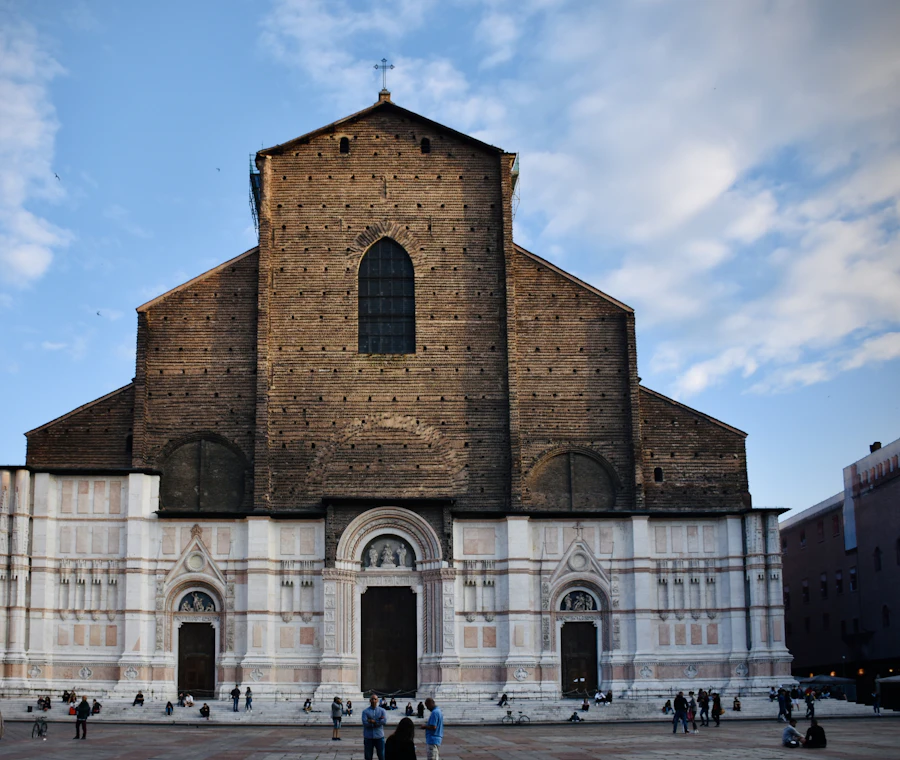
- Politecnico di Milano and Politecnico di Torino
- Sapienza Universita di Roma
- Universita di Bologna and Universita di Padova
- Strongest in engineering, computer science, medicine and humanities
- Growing English taught masters portfolio, income linked fees
Private universities and B schools
- Bocconi University and Luiss Guido Carli
- IE Business School Milan campus
- Fully English taught, world ranked business masters
- Fixed higher fees, stronger recruiter pipelines
Specialised design institutions
- European Institute of Design (IED)
- Domus Academy and NABA
- Fashion, product, interior and communication design
- Portfolio led admission rather than pure academics
Paperwork
The Italy Type D National Visa process, step by step
One visa, one portal, one police appointment
For any programme longer than 90 days you need the Type D National Visa, or Visto Nazionale. This is the only visa that leads to the Permesso di Soggiorno, the residence permit that actually switches on your study and work rights.
STEP 1 ADMISSION
First, receive your admission letter from the Italian university, either through the Universitaly portal or by applying directly.
STEP 2 PRE ENROLMENT
Next, complete pre enrolment on Universitaly.it. This Ministry of University portal is mandatory, and you must finish it before you apply for the visa.
STEP 3 APPOINTMENT
Then book a slot at the Italian Embassy in Delhi, or at the Consulates in Mumbai, Kolkata, Chennai or Bengaluru.
STEP 4 DOCUMENTS
After that, submit your passport, admission letter, Universitaly confirmation, proof of accommodation, private travel medical insurance for the first 30 days, and proof of funds of roughly EUR 6,948 for the year.
STEP 5 FEES
Also, pay the Type D visa fee of approximately EUR 50 to EUR 116, plus the VFS service charges.
STEP 6 QUESTURA
Finally, after you land, apply for the Permesso di Soggiorno at the local Questura within 8 working days. This grants full study and work rights.
In fact, missing that 8 working day window is the single most common mistake Indian students make in Italy. Therefore, book the Questura appointment before you fly, not after you arrive.
Earning while studying
Work rights while you study in Italy 2026

Twenty hours a week, no separate work permit
Notably, your Type D visa and Permesso di Soggiorno already carry work rights. Because of that, you do not need to apply for anything extra before taking a part time job.
- First of all, you can work up to 20 hours per week during the academic term.
- In addition, you can work full time up to 1,040 hours per year during official academic breaks.
- Meanwhile, your employer registers the contract with INPS, the Italian social security body. No separate work permit is required.
- In practice, realistic earnings sit at EUR 700 to EUR 1,100 per month in Milan, Turin and Bologna.
- As a result, in smaller cities that income covers most of your rent. In Milan, by comparison, it covers roughly half.
After graduation
The 12 month post study permit under study in Italy 2026 rules
Job search and entrepreneurship, in one permit
Importantly, the Italian government updated its post study framework in 2026 to give non EU graduates a clearer route. Consequently, bachelor, masters and PhD graduates can now apply for a 12 month job search and entrepreneurship residence permit once they finish their degree.
- First, apply at your local Questura before your student residence permit expires.
- In turn, the permit grants 12 months of legal stay to look for skilled work or to launch a business in Italy.
- Then, once you hold a qualifying job offer, you convert to a Nulla Osta al Lavoro, the work permit.
- In addition, conversions from study status to work status are often exempt from the annual Decreto Flussi immigration quota.
- Eventually, long term residence, the Carta di Soggiorno UE, comes after 5 years of continuous legal stay. Importantly, your student and job search years both count.
In particular, that last point matters more than families expect. Because the student years count, a two year masters plus a job search year already puts you three years into a five year residence clock.
Head to head
How Italy compares with other European destinations
| Factor | Italy | Germany | France | Spain |
|---|---|---|---|---|
| Public tuition per year | EUR 500 to EUR 4,000 | EUR 0 to EUR 3,000 | EUR 250 to EUR 4,000 | EUR 1,500 to EUR 4,000 |
| Post study stay | 12 months | 18 months | 12 to 24 months | 12 months |
| Term time work | 20 hours per week | 20 hours per week | 20 hours per week | 30 hours per week |
| English taught degrees | 600 plus | 2,000 plus | 1,500 plus | 700 plus |
| Local language needed for work | Italian at A2 or B1 | German at B1 or B2 | French at B1 | Spanish at B1 |
Germany still wins on the length of the post study window. However, Italy wins on entry difficulty, on scholarship generosity and on the cost of living outside its two largest cities. For a full comparison of the French route, read our guide to study in France 2026, or the Spanish route in our guide to study in Spain 2026.
Fit check
Who should choose to study in Italy 2026
Italy is a strong fit if
- You want European quality at a fraction of UK or US tuition
- You are comfortable with income linked ISEE fee calculations
- You study design, engineering, business, humanities or medicine
- You will commit to Italian at A2 or B1 level alongside your degree
- You value quality of life and low costs outside Milan and Rome
Look elsewhere if
- You need a post study window longer than 12 months
- You want to work only in English after graduating
- Your family cannot produce ISEE style income documentation
- You need a very large English taught choice in niche subjects
- You want permanent residence in under 5 years
Common questions
Frequently asked questions about study in Italy 2026
Can I study in Italy 2026 without knowing Italian?
Yes, at least for admission. More than 600 degrees are taught fully in English, and no Italian is required to enrol. However, Italian at A2 or B1 becomes important later, because most work permit conversions and long term residence steps expect it. Therefore, start language classes in your first semester rather than in your final one.
Money, visa and family questions about study in Italy 2026
What is ISEE, and why does it change my tuition?
To explain, ISEE is the Italian indicator of household economic situation. Public universities use it to bracket your tuition against declared family income. Consequently, two students on the same course can pay very different fees. Typically, Indian families submit income and asset documents, which are then converted into an ISEE Parificato through an authorised CAF centre.
How much money do I need to show for the Italy student visa?
As a rule, plan for approximately EUR 6,948 for the year, which works out to about EUR 580 per month. In addition, you will need proof of accommodation and private travel medical insurance covering your first 30 days in Italy.
Is the DSU scholarship realistic for Indian students?
It is, and yet it is widely under applied for. DSU is a regional right to study grant rather than a merit prize, so eligibility turns mainly on income and on enrolling at a participating public university. As a result, winners typically receive a tuition waiver, accommodation, meal vouchers and a cash stipend that together reach EUR 7,000 per year.
Can I bring my spouse while I study in Italy 2026?
In general, family reunification is possible once you hold a valid Permesso di Soggiorno, adequate accommodation and sufficient income. In practice, most students apply after their first year, once housing and income evidence are stable.
Working with us
How Learner Aid supports your plan to study in Italy 2026
At Learner Aid, our Italy counselling covers Universitaly pre enrolment, ISEE certification support for income linked tuition, and DSU scholarship applications for full waivers plus stipends. Beyond that, we handle Type D National Visa documentation, Questura registration guidance for the Permesso di Soggiorno, and Italian language planning up to A2 or B1 for your eventual work permit conversion.
In addition, we plan education loans through our associated partners, including Axis, Yes Bank, HDFC Credila, IDFC First, Avanse and Auxilo. So if you are building a 2026 shortlist, Italy deserves a slot on it. In our view, it remains one of the most under shortlisted European destinations right now, and the tuition math alone often changes the family decision.
Ready to add Italy to your shortlist
Talk to a Learner Aid counsellor about study in Italy 2026
We will map your profile against public university fees, DSU scholarship eligibility and the Type D visa timeline.
Verify it yourself